

(Average reading time 2 mins)
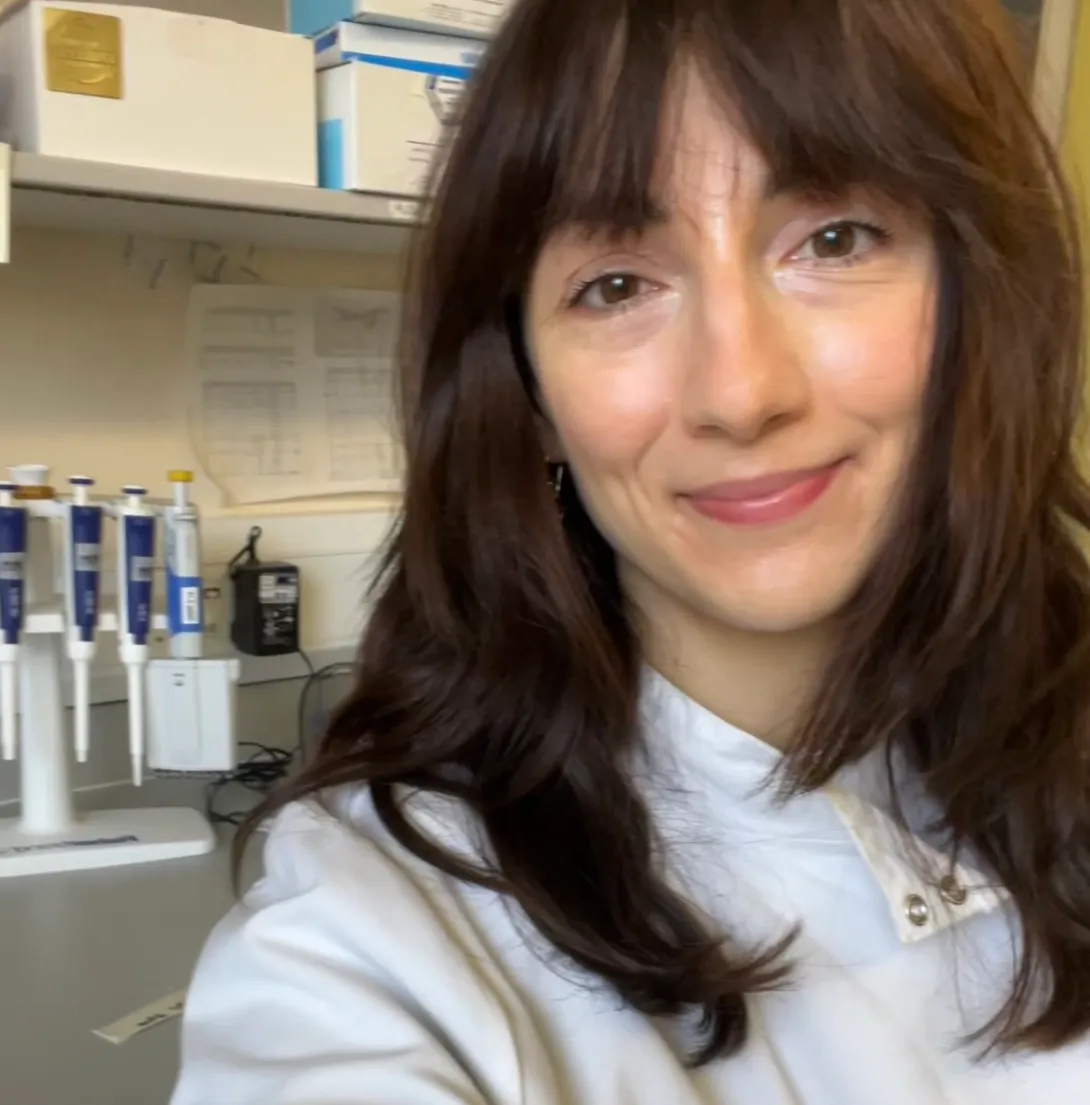
Continuing our series following the PhD journey at the Euan MacDonald Centre, we are catching up with Maja Matoga, now in Year 2 of her PhD at the University of Edinburgh.
Can you describe your PhD project and what you’ve been working on?
In healthy cells, TDP-43 stays mostly in the control center of the cell (called the nucleus) and helps the cell handle important messages (like instructions) needed to keep the cell working properly. In MND and related diseases, TDP-43 can end up in the wrong place and clump together, which may stop it from doing its job.
I’m trying to understand what goes wrong with these cell “messages” when TDP-43 isn’t working properly. To study this, I use motor neurons grown in the lab from stem cells, and I also study donated patient tissue to compare what we see in the lab with what happens in people.
What does your research involve on a day-to-day basis?
Something I love about my PhD, each day has been different. Some days are fully lab-based, working through planned experiments; others are quieter and focused on reading papers or computational work. Alongside that, there are also supervisor and group meetings, as well as the steady stream of deadlines such as reviews or progress reports.
A surprisingly big part of day-to-day research is troubleshooting - working out whether a result reflects real biology or a technical issue, tightening controls or repeating experiments until you trust the conclusions. I’ve also found that second year is when confidence and doubt can occur side by side, especially as early ideas either develop into a clear research direction or need a rethink. Some days the small wins really matter whether that's an experiment that finally works or an analysis that suddenly makes sense.
What opportunities have you had beyond the lab?
Outside of the lab, I’ve taken part in a broad range of activities, from training courses (including microscopy and data analysis) to working closely with students through mentoring. I’ve been fortunate to participate in a mentoring scheme supporting students from Ukraine as they plan their next steps and build their scientific careers. It’s been a valuable way to develop my communication and mentoring skills, and it’s also felt good to give back some of the support I benefited from earlier in my own career.
I’ve also attended several conferences such as the Stem Cells in Neurodegeneration meeting held in Edinburgh last year. These have been a great opportunity to step back from my own project, learn about new research and techniques, and build connections that could lead to future collaborations.
What has been the most rewarding part of your PhD so far?
One of the most rewarding parts was the Euan MacDonald Symposium held last year, where I got to hear directly from people living with MND and their families. It made me feel proud to contribute to research that’s actively trying to understand motor neuron disease and move towards better outcomes.
Watch this short video from Maja about her PhD journey.
Opens University of Edinburgh's Media Hopper. Viewing length approximately 1 minute.
Download the audio transcription pdf
Relevant links
Read the introductory article Rread the introductory article: Training the Next Generation of MND Researchers
Information about the Euan MacDonald Centre
Information about the funded PhD scheme
Information about how you can support us
Image courtesy of Maja Matoga